


As business leaders, you’re constantly striving to optimize your organization’s performance. However, two subtle yet impactful phenomena may be hindering your efforts: quiet quitting and employee disengagement. While often confused, these distinct issues require different approaches to maintain a productive and engaged workforce.

As an HR Business Consultant, I’ve witnessed firsthand how addressing these challenges can transform workplace dynamics and drive sustainable success. This article will equip you with the knowledge to identify early warning signs, understand root causes, and implement effective solutions. By mastering these concepts, you’ll be better positioned to foster a thriving work environment that attracts and retains top talent.
Understanding Quiet Quitting
In the modern workplace, there has been a growing trend of quiet quitting among employees. This phenomenon refers to employees who may not physically leave their jobs, but mentally check out and only do the bare minimum. This behavior can have various underlying reasons, such as feeling overworked, undervalued, or seeking a better work-life balance. Despite its seemingly harmless nature, quiet quitting can have significant consequences for both individuals and organizations. When employees disengage and only do the bare minimum, it can lead to a decline in overall productivity and team dynamics. This behavior can also create a negative work culture, as other team members may end up picking up the slack, causing resentment and burnout.
As business leaders, it’s essential to be aware of the signs of quiet quitting and address them promptly. This can involve having open and honest communication with employees, providing recognition and support, and creating a positive work environment. By addressing the root causes of quiet quitting, leaders can prevent its negative effects and promote a more engaged and productive workforce.
Decoding Employee Disengagement
Disengaged employees don’t just lack motivation and passion, they can have a detrimental effect on the entire company. With low productivity and subpar performance, disengaged employees can bring down the overall quality of output and create a toxic work environment. This can lead to a decrease in team morale, leaving the remaining employees feeling overworked and demotivated. Disengaged employees are often overlooked and their effect on the company is underestimated. They can be a major hurdle for business leaders, hindering progress and growth.
Leaders need to identify and address disengagement in their employees to maintain a positive and productive work environment. This can be achieved through open communication, understanding employee needs, and addressing any underlying issues. Employee disengagement is not a problem that can be ignored or dismissed. It requires active efforts from leaders to identify the root causes and take necessary steps to re-engage their employees. This can lead to a more motivated and productive workforce and ultimately contribute to the success and growth of the company. Business leaders must prioritize employee engagement and create a positive work culture to achieve their goals and maintain a competitive edge in the market.
Quiet Quitting vs Disengagement: A Leadership Perspective
As a leader, your ability to distinguish between quiet quitting and disengagement is crucial. Here’s what to look out for:
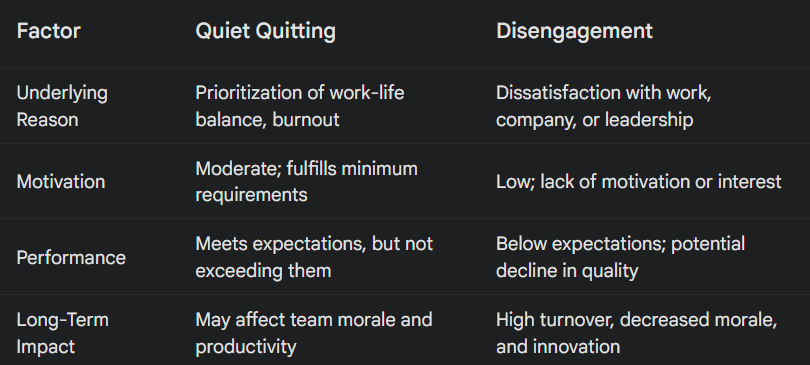
Understanding the Root Causes of Quiet Quitting
To effectively address these issues, it’s essential to understand what drives them. Common causes include:
- Lack of growth opportunities
- Poor work-life balance
- Inadequate compensation or recognition
- Misalignment with company values or goals
- Ineffective leadership or management
- Overwhelming workload or unclear expectations
- Limited autonomy or decision-making power
- Insufficient feedback or communication
By identifying these root causes, you can develop targeted strategies to re-engage your workforce.
Leadership Strategies to Deal with Quiet Quitting
As a business leader, your approach to these challenges can make or break your organization’s success. Here are key strategies to implement:
- Enhance Communication: Foster an environment of open, transparent dialogue. Regular town halls, one-on-ones, and anonymous feedback mechanisms can help you stay connected with your team’s pulse.
- Provide Growth Opportunities: Invest in your employees’ development. Offer mentorship programs, support continued education, and create clear career progression paths.
- Recognize and Reward: Acknowledge contributions meaningfully. This doesn’t always mean monetary rewards; public recognition and career advancement opportunities can be equally powerful.
- Foster Work-Life Balance: Show that you value your employees’ well-being. Offer flexible working arrangements and encourage the use of vacation time.
- Align Individual and Organizational Goals: Help your team see how their work contributes to the bigger picture. Regularly communicate company objectives and celebrate collective achievements.
- Empower Your Team: Give employees autonomy and trust them with decision-making power where appropriate. This fosters a sense of ownership and engagement.
- Invest in Leadership Development: Remember, engagement often hinges on immediate supervisors. Ensure your management team has the skills to lead effectively and empathetically.
- Conduct Stay Interviews: Don’t wait for exit interviews. Regularly check in with your top performers to understand what keeps them engaged and address any concerns proactively.
- Reassess Workloads and Job Designs: Ensure roles are challenging yet achievable. Regularly review job descriptions and be open to job crafting where it makes sense.
- Create a Culture of Continuous Feedback: Foster an environment where feedback flows freely in all directions. This helps address issues before they escalate and keeps everyone aligned.
Quiet Quitting: Measuring Success and Iterating
Implementing these strategies is just the beginning. To ensure long-term success, you must continuously measure the impact of your interventions. Key metrics to track include employee engagement scores, performance metrics, turnover rates, and productivity indicators. Regularly analyze this data to identify trends, celebrate successes, and adjust your approach as needed. Remember, addressing quiet quitting and disengagement is an ongoing process that requires commitment and adaptability.
When analyzing the data, it is important to not only focus on the negative aspects but also celebrate the successes. Recognizing and acknowledging the successes of your interventions can provide motivation and encouragement for both employees and management to continue implementing these strategies. Additionally, tracking and analyzing these key metrics can help identify areas of improvement and provide insights on how to further engage employees.
However, it is also crucial to remember that implementing these strategies is not a one-time fix. The process of addressing quiet quitting and disengagement is ongoing and requires dedication and adaptability. As the workplace and employees evolve, so should the interventions and strategies used to engage them. It is important to regularly reassess and adjust these approaches to ensure long-term success and maintain a positive work environment.
Conclusion
As a business leader, your role in combating quiet quitting and employee disengagement is pivotal. By understanding these phenomena, identifying early warning signs, and implementing targeted strategies, you can create a workplace where employees feel valued, engaged, and motivated to contribute their best.
There’s no one-size-fits-all solution, but the key lies in fostering open communication, continuously assessing your organization’s unique needs, and being willing to adapt your approaches. By doing so, you’ll not only address current challenges but also build a resilient organizational culture that can withstand future workforce dynamics.
In today’s competitive business landscape, an engaged workforce is your greatest asset. As you implement these strategies, you’ll not only enhance your organization’s performance but also position your company as an employer of choice. The journey towards a fully engaged workforce may be challenging, but the rewards – in terms of productivity, innovation, and overall business success – are well worth the effort.
Remember, as an HR Business Consultant, I’m here to support you in this journey. By partnering together, we can transform your workplace into a thriving environment where both your business and your employees can reach their full potential.